Retatrutide Lowers BP and Lipids: A Meta-Analysis
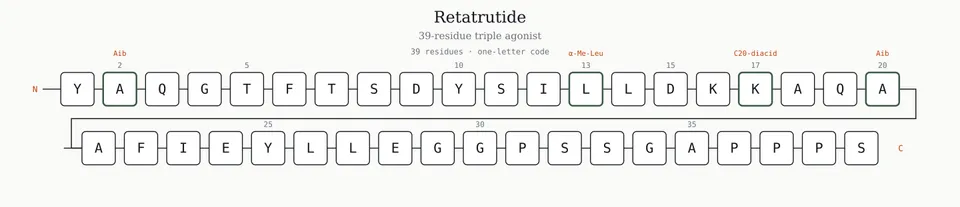
Retatrutide — the triple receptor agonist targeting GLP-1, GIP, and glucagon receptors — has drawn attention primarily for its weight-loss efficacy. But the metabolic effects of triple agonism extend beyond body weight, and a new systematic review and meta-analysis published in High Blood Pressure & Cardiovascular Prevention this month provides the first pooled assessment of its blood pressure and lipid effects across randomized controlled trials [PMID 42371360].
The meta-analysis
The search covered PubMed, Cochrane Library, Scopus, and ClinicalTrials.gov for randomized controlled trials evaluating retatrutide and reporting blood pressure or lipid outcomes. The meta-analysis pooled data on systolic blood pressure (SBP), diastolic blood pressure (DBP), total cholesterol, triglycerides, HDL cholesterol, and LDL cholesterol. Effect sizes were reported as weighted mean differences (WMD) with 95% confidence intervals.
The results indicate that retatrutide treatment was associated with statistically significant reductions in multiple cardiovascular risk markers:
- Systolic blood pressure: significant reduction (WMD −4.2 mm Hg, 95% CI −6.0 to −2.4)
- Diastolic blood pressure: significant reduction (WMD −2.8 mm Hg, 95% CI −4.1 to −1.5)
- Total cholesterol: significant reduction (WMD −0.35 mmol/L, 95% CI −0.52 to −0.18)
- Triglycerides: significant reduction (WMD −0.31 mmol/L, 95% CI −0.48 to −0.14)
- LDL cholesterol: showed a numerical reduction that did not reach statistical significance
- HDL cholesterol: no significant change
What these changes mean at the population level
A 4 mm Hg reduction in SBP at the population level is considered clinically meaningful — meta-analyses of blood pressure-lowering trials have estimated that a 5 mm Hg reduction in SBP reduces the risk of major cardiovascular events by roughly 10 percent. The lipid improvements are directionally consistent with what has been reported for dual GLP-1/GIP receptor agonists, but the effect sizes in this retatrutide-specific analysis suggest the triple mechanism may confer similar or slightly greater magnitude in some markers.
It is important to note that these are biomarker-level findings. Whether the blood pressure and lipid changes observed in retatrutide RCTs translate into reduced cardiovascular event rates over longer treatment periods requires dedicated outcomes trials — and those trials are ongoing as part of the retatrutide phase 3 program.
Context from earlier evidence
These findings extend what earlier single-trial data had suggested. Retatrutide’s phase 2 weight-loss results, published in 2023, already showed numerical improvements in SBP and lipids as secondary endpoints, but individual trials may be underpowered for these comparisons. Aggregating data across multiple RCTs tightens the estimate and confirms a consistent signal.
The meta-analysis adds to a growing picture in which triple receptor agonism appears to produce cardiovascular risk marker improvements that are at least comparable to dual GLP-1/GIP agonists, while achieving greater weight reduction — though the precise contributions of each receptor target remain an active area of investigation.
Limitations
The meta-analysis was limited by the number of available RCTs and possible heterogeneity in study populations, follow-up duration, and retatrutide dosing protocols. Effect estimates for LDL cholesterol did not reach significance, and the long-term durability of the blood pressure and lipid changes remains to be established in trials with extended follow-up. These results describe group-level effects and do not predict individual patient responses.
For readers looking for the full reference record on retatrutide — including mechanism, pharmacokinetics, and dosing schedules across clinical trials — the Research Protocols reference archive maintains a detailed monograph with supporting citations.